
Why is the color and thickness of the sheet not the only factor?
Two sheets may look similar as samples yet perform completely different roles in a structure. The difference appears in the profile, protection, joint and over time.
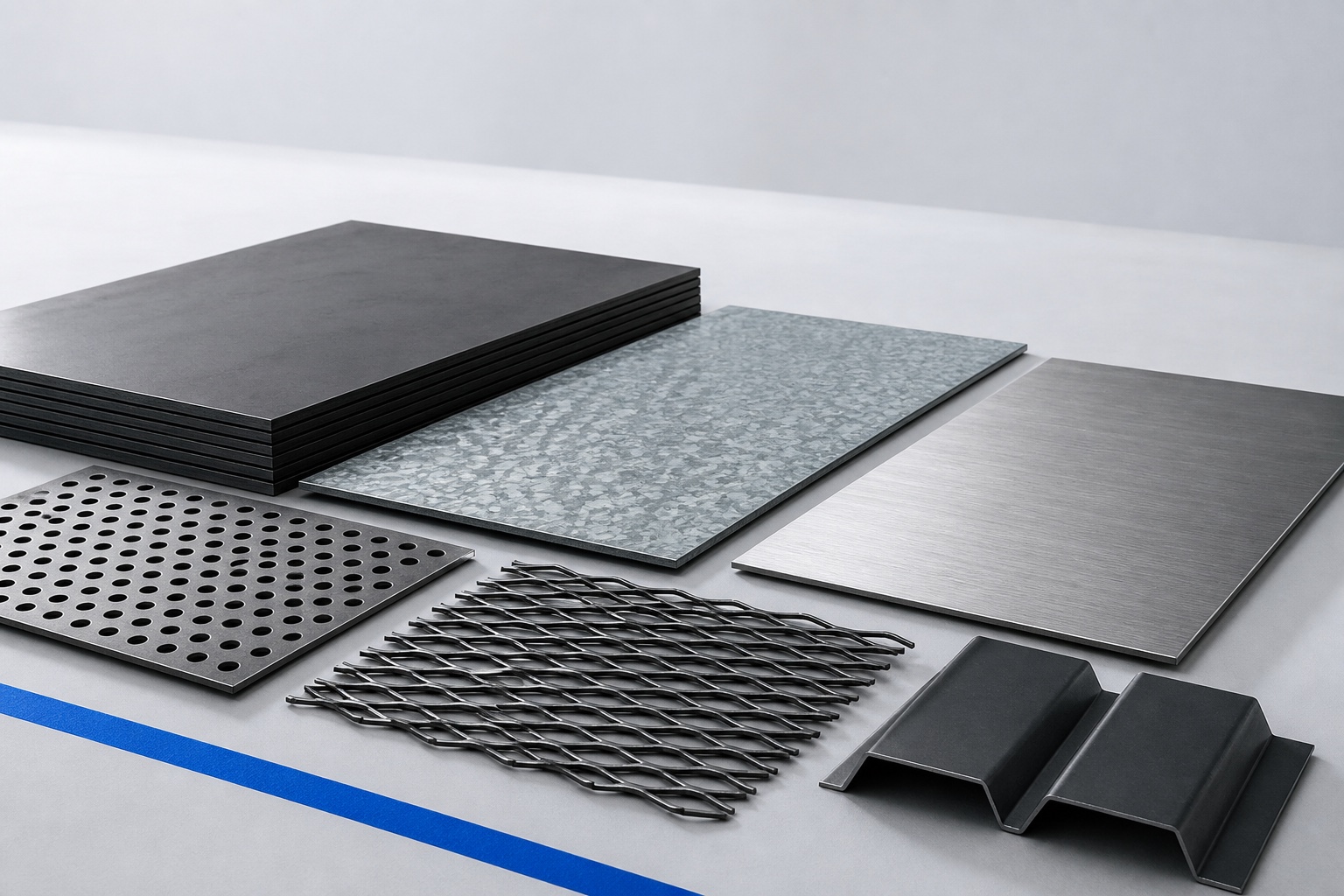
In terms of materials, we will explain the differences that are often not visible on the sample: load capacity of the profile, surface protection, composition of the sandwich panel, correct joint, sealing and the behavior of the detail after years of use.
Selection does not begin with colour. First establish what the element must carry, the environment it will work in and how it will be installed or maintained.
The profile changes how sheet metal behaves.
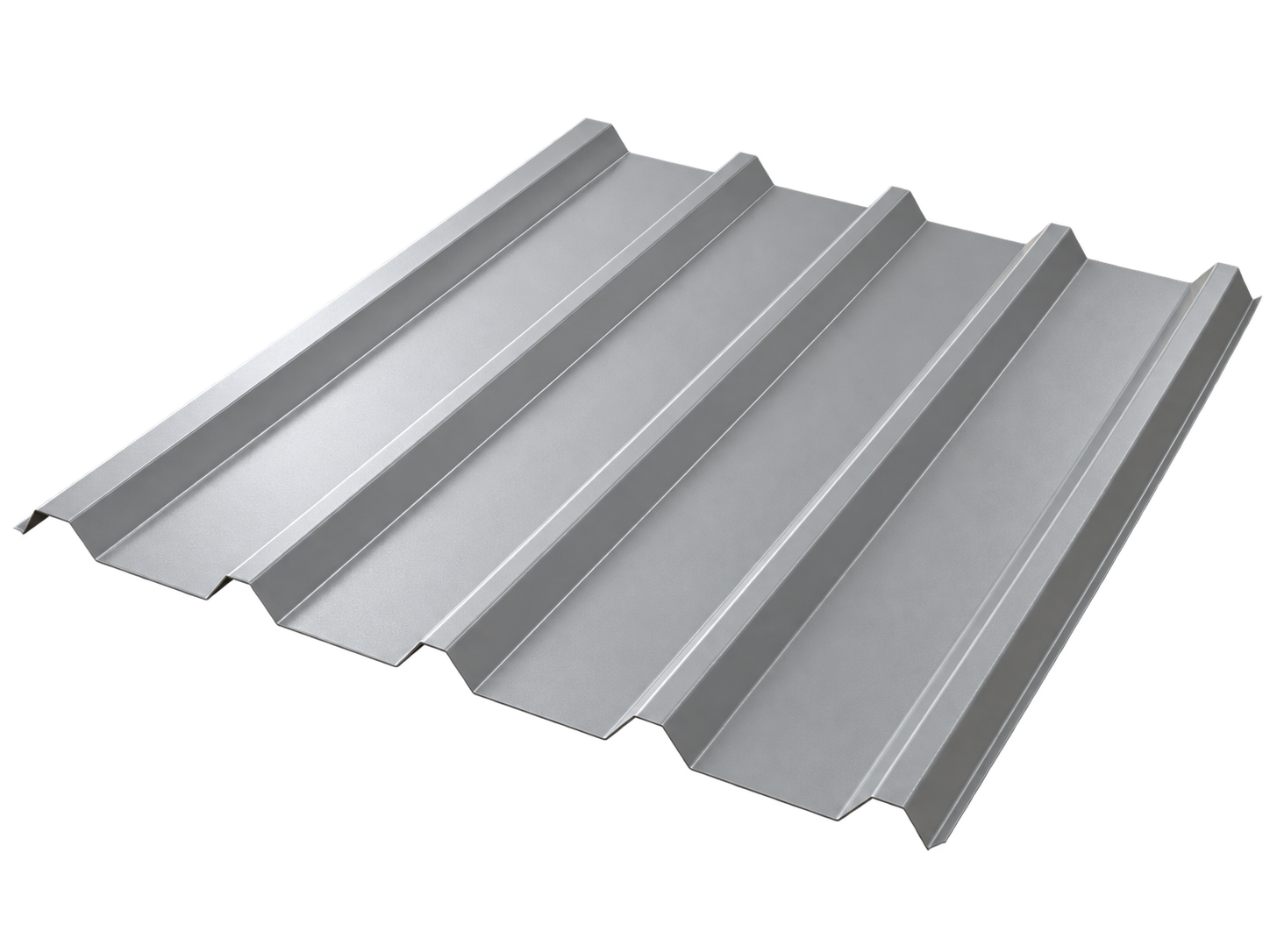
Flat sheet serves different purposes from trapezoidal or other profiled material. Geometry increases stiffness and affects allowable span and fixing. Thickness is only one part of the decision.
The right material is not the thickest one. It is the one suited to the load, detail and environment.
The finish must suit the environment.
A dry interior, an exterior gate and an element exposed to an aggressive environment have different requirements. Galvanising, powder coating or a paint system must therefore be selected for the use and expected maintenance.
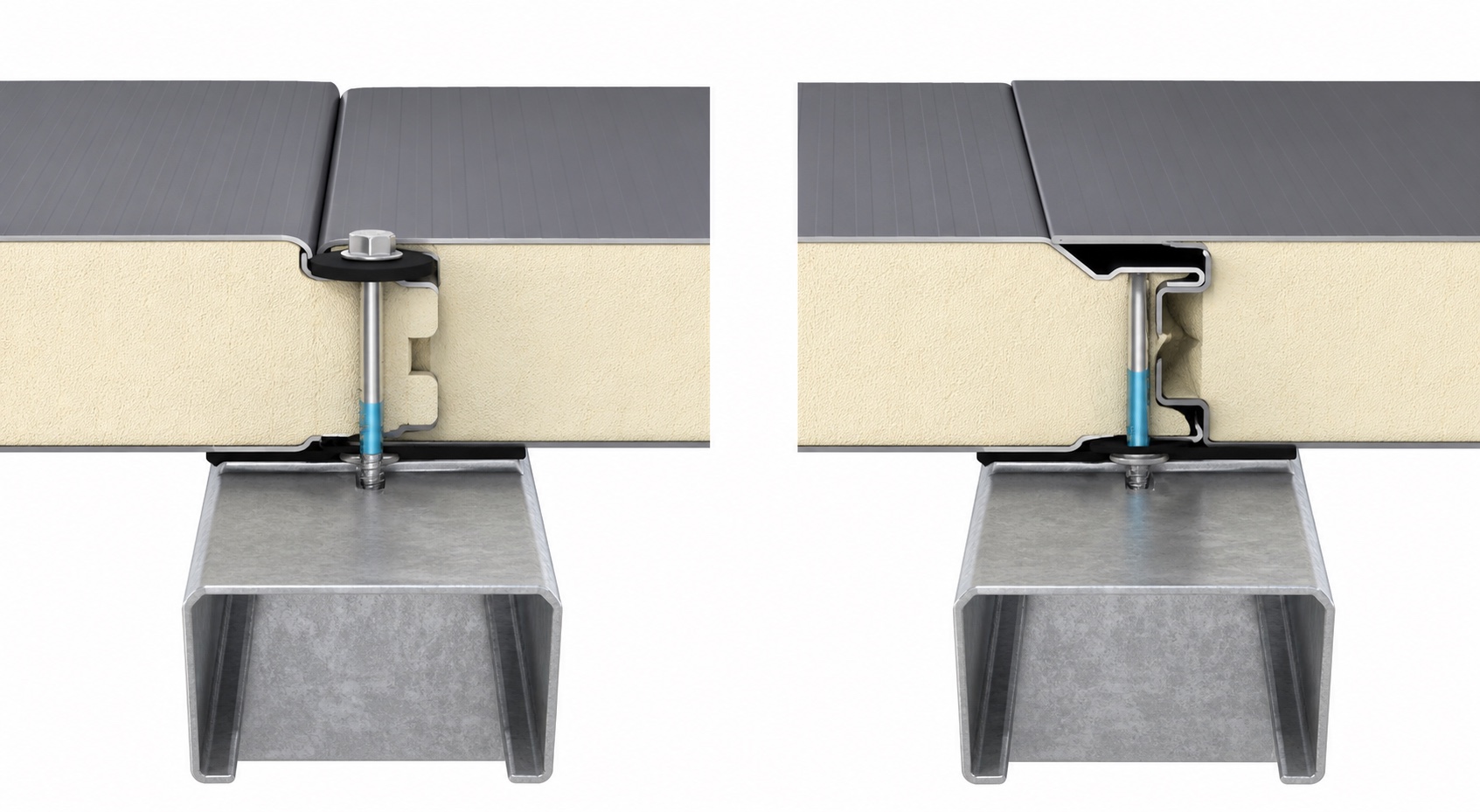
The detail matters years later.
Junctions, plinths, parapets, corners and penetrations affect weather-tightness as much as the panel itself. Correct joints, sealing and access for inspection often separate a good-looking handover from a reliable long-term solution.