
Help does not start with production and assembly.
How a practical need of volunteer firefighters becomes a prepared technical concept, a realistic budget and a facility that serves its municipality for years.
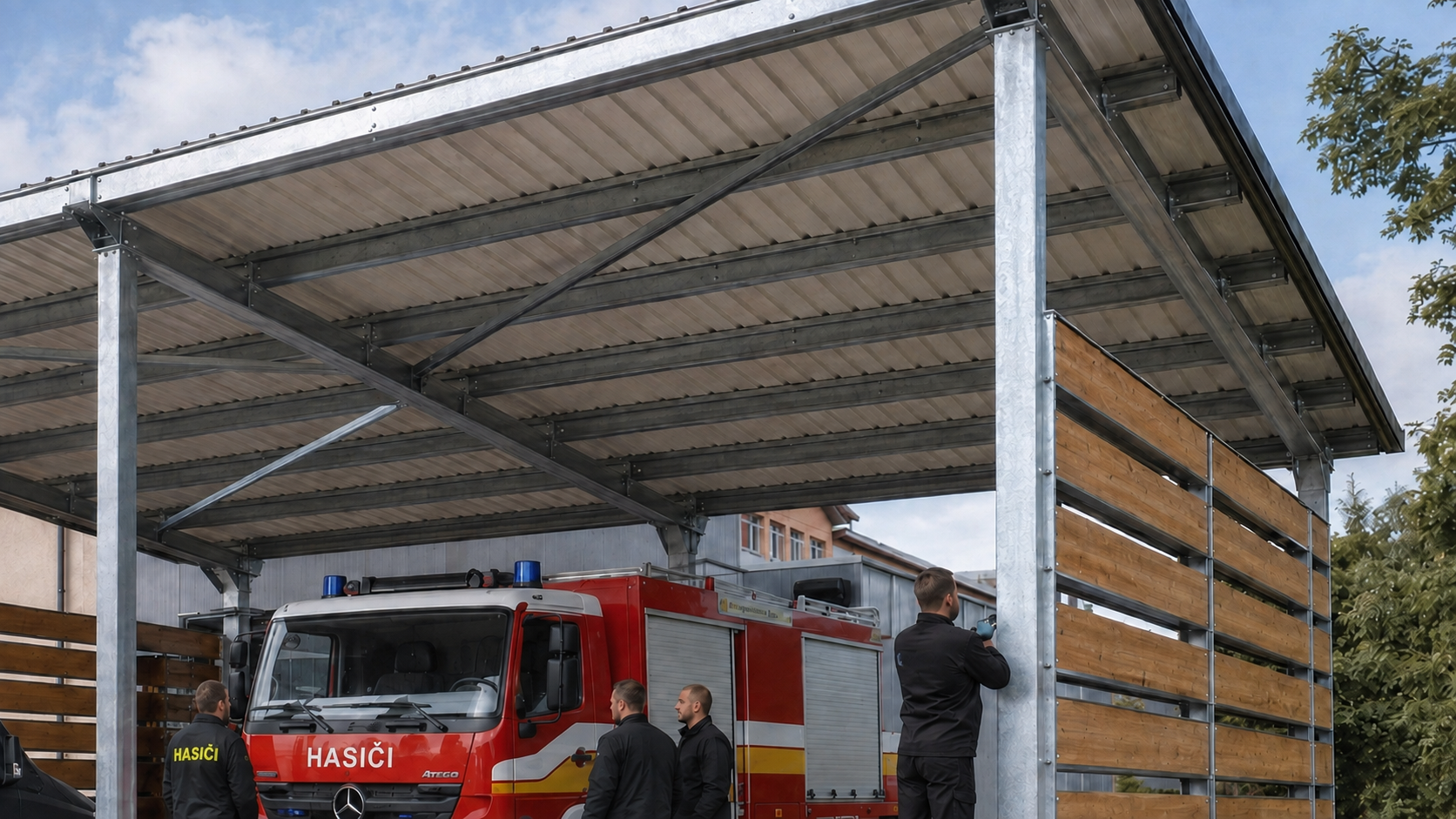
For municipal projects and volunteer fire brigade facilities, we can become involved while there is still only a need and an initial idea. Together we turn it into a technically viable scope, an indicative budget and documentation that supports a responsible decision on the next steps.
This preparation is not an extra formality. Before submitting an application or commissioning a design, the municipality needs to know whether the proposed solution fits the site, how it connects to the existing building, what the budget must include and whether it can be built within the intended schedule. Volunteer firefighters know the daily operation, equipment dimensions, required access routes and shortcomings of the current facilities best. Combining that experience with technical planning creates a far more accurate brief.
Four million euros for equipment and fire stations.
On 8 July 2026, the Slovak Interior Ministry announced two funding calls with a combined value of four million euros. One million was allocated to servicing, maintaining and repairing firefighting vehicles, machinery, equipment and tools, with municipalities able to apply for €3,000 to €5,000. A further three million was allocated to constructing, renovating and modernising fire stations, improving building energy performance and preparing project documentation. Depending on project type, support ranged from €15,000 to €70,000.
The call covered towns and municipalities included in the nationwide deployment system. Applications closed on 24 August 2026. The application form also required at least five per cent co-financing and asked applicants to define the objective, current situation, proposed solution, schedule, sustainability and project budget. Merely stating what a municipality intends to buy or build is not enough; the problem being solved and the long-term use of the outcome must be explained.
According to the official form, eligible purposes include construction, technical improvement and repair of a fire station or firehouse and related facilities, acquisition of a suitable building and preparation of project documentation. Public support therefore extends beyond construction itself and allows municipalities to prepare the documentation required to price, permit and deliver a larger project responsibly.
A good application does not begin with a form. It begins with a precisely defined problem, a viable technical solution and a budget that reflects the actual site.
From a conversation with firefighters to a clear brief.
The starting point is often not a finished design but a practical need: securely house an emergency vehicle, create covered equipment parking, add storage, improve the fire station's energy performance or extend an existing building. The first discussion is therefore not just about dimensions. We examine what happens before deployment and after return, how vehicles move, where they are cleaned and charged, which tools need immediate access and what future capacity the unit will require.
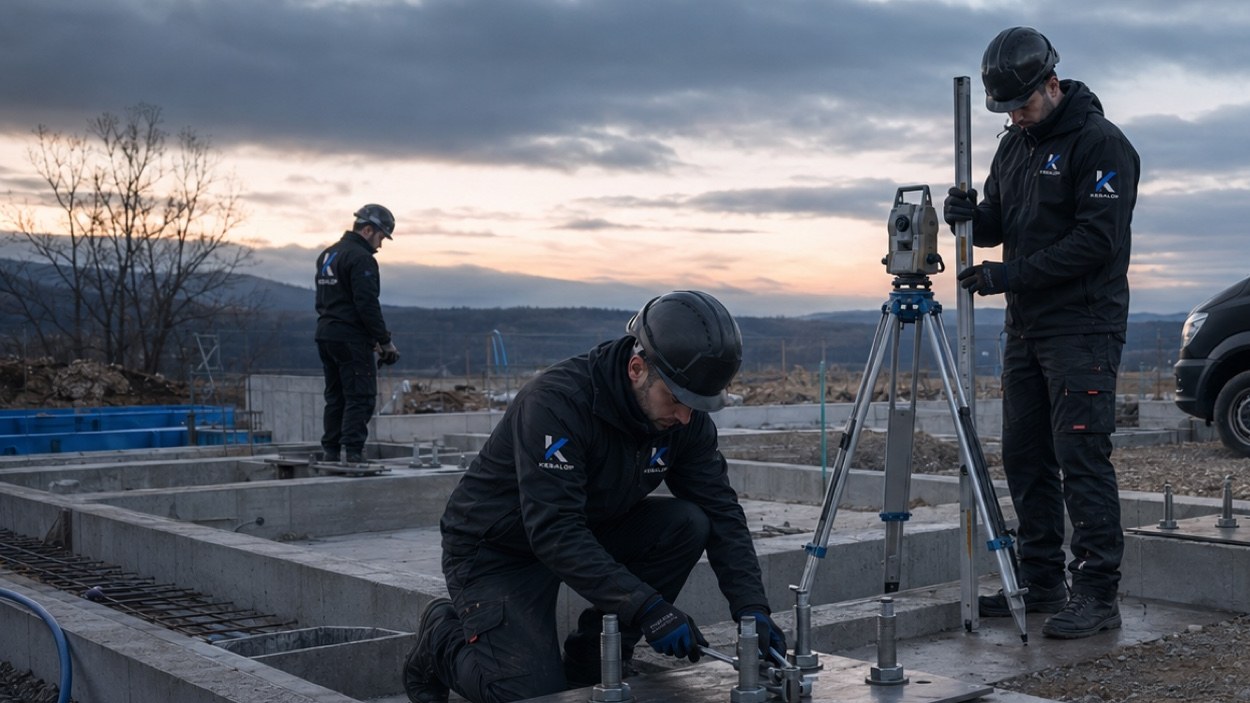
A site survey follows. Access, levels, property boundaries, existing paved areas, anchoring options, roof junctions and electrical routes are checked on site. For a steel canopy or extension, less obvious details also matter: drainage, clearance for vehicle doors, manoeuvring width, corrosion protection and the option of adding cladding later.
The survey produces a working scope that separates essentials from optional items and identifies matters requiring an authorised designer or another qualified professional. At this stage KESALOP provides technical cooperation, a viable solution, site measurements and pricing documentation. We do not replace the municipality's legal or grant advisers and do not promise an application outcome. Our role is to ensure that the technical section is based on the actual site and realistic production rather than a generic estimate.
Fire brigade operations, equipment dimensions, site and existing constraints.
Scope, structural principle, materials, trades and critical details.
Realistic items for the municipality, designer or funding application.
Controlled production, surface protection, coordination and handover.
The budget must speak the same language as the design.
A single total is not enough for a public project. The budget must be readable and logically tied to what will be delivered. Structural steel, wall or roof cladding, finishes, anchoring, electrical work, installation, transport and any building work are identified separately. This helps the municipality compare scope with available funding and reduces the risk of a major omitted item emerging during delivery.
The schedule is equally important. Steel production must align with foundation readiness, cladding delivery, electrical work and access for installation equipment. At an operational fire station, the work must also preserve the unit's emergency readiness. We therefore divide the project into controllable stages coordinated with the municipality, designer and other trades.
Five agreed projects, three more in preparation.
According to KESALOP's internal records, technical cooperation on municipal and volunteer fire brigade projects has resulted in five agreed contracts in the current period, with three more expected to continue next year. This is not Interior Ministry data or the result of the overall funding call; it refers only to projects in whose preparation or planned delivery KESALOP has been involved.
Every figure represents a different local problem and scope. One project may be a simple covered bay; another may involve broader facility alterations, structural steel, cladding or electrical coordination. The method is consistent: understand operations first, design an appropriate technical solution second and price it only then. The municipality receives documentation it can explain to councillors, the designer and during subsequent delivery checks.
More preparation time is not a delay. It creates room to catch conflicts before they reach the workshop or site. Changing a dimension on a sketch takes minutes; changing a finished foundation, beam or roof detail can have a major effect on cost and schedule. This is why we regard early technical cooperation as one of the most valuable parts of the process.
From documentation to finished component.
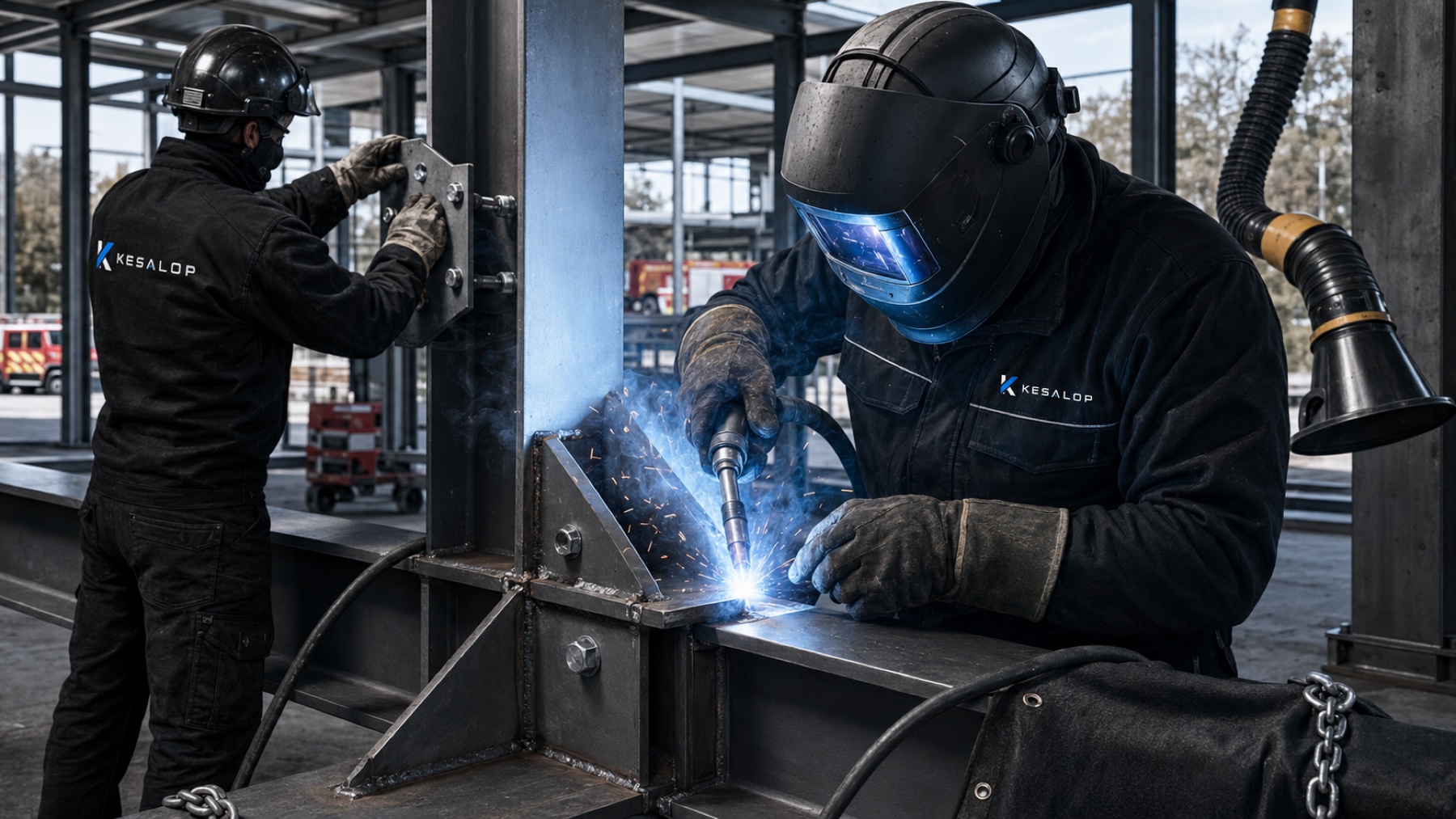
Once the scope is confirmed and documentation prepared, production begins. Material is ordered in the specified sections and thicknesses; components are cut, drilled and welded; dimensions and interfaces are checked; and surface protection follows. During installation, anchoring, structural geometry, joints, cladding and drainage details are checked again. Electrical work is coordinated so that lighting, sockets, drives or provision for equipment charging are not improvised afterwards.
The outcome should not merely look good at handover. It must operate safely every day, allow servicing, withstand the weather and remain understandable to those who later maintain or extend it. Handover therefore also covers practical use, inspection and maintenance.
Volunteer fire brigades are an important part of protecting municipal residents and property. Public funding can create an opportunity to improve their conditions, but real value emerges only when funding is combined with sound preparation and conscientious delivery. This is exactly where KESALOP aims to be a practical technical partner for municipalities.
Public sources
Data used in this article.
Information on the value, deadline and focus of the calls is based on Slovak Interior Ministry data. KESALOP project counts are internal company figures and are not ministry statistics.