 Request a quote ›
05 / Service
Repair, modify or replace it the right way.
Service starts by identifying the cause of the problem. Only then do we decide whether repair, a local modification, refurbishment or a new part is the right solution.

Service interventions
From a single malfunction to a planned operation adjustment.
Before intervention, we need to know what the element does, how it is loaded, what has changed and whether the repair will affect security or downstream technology.
Welding and metal repairs
- repair of cracked or damaged parts
- addition of braces, holders and mounting points
- preparation and repair of the surface after intervention
Modifications of constructions
- change of openings, connections and anchoring
- addition of railings, landings and service approaches
- reinforcement only according to technical assessment
Gate and access service
- mechanical parts, guidance, stops and adjustment
- modification of the wing, frame and infill
- coordination of the drive and safety elements according to the scope
Assemblies and overhauls
- disassembly and reassembly of elements
- replacement of worn or damaged parts
- product modifications following an on-site survey
First assessment
A good photograph speeds up the assessment, but it cannot replace an on-site survey.
During the first contact, overall photos, detail of the fault, dimensions, description of use and information on whether the device is shut down or still in operation will help.
What happened
Cracking, deformation, corrosion, play, collision, non-functioning movement or request for new function.
Loads and function
Load, movement, safety function and continuity to other parts of the operation.
Access and working conditions
Installation site, shutdown of technology, lifting technology, electricity and fire precautions.
Temporarily or permanently
We distinguish between emergency make-safe work, local repairs, refurbishment and permanent replacement.
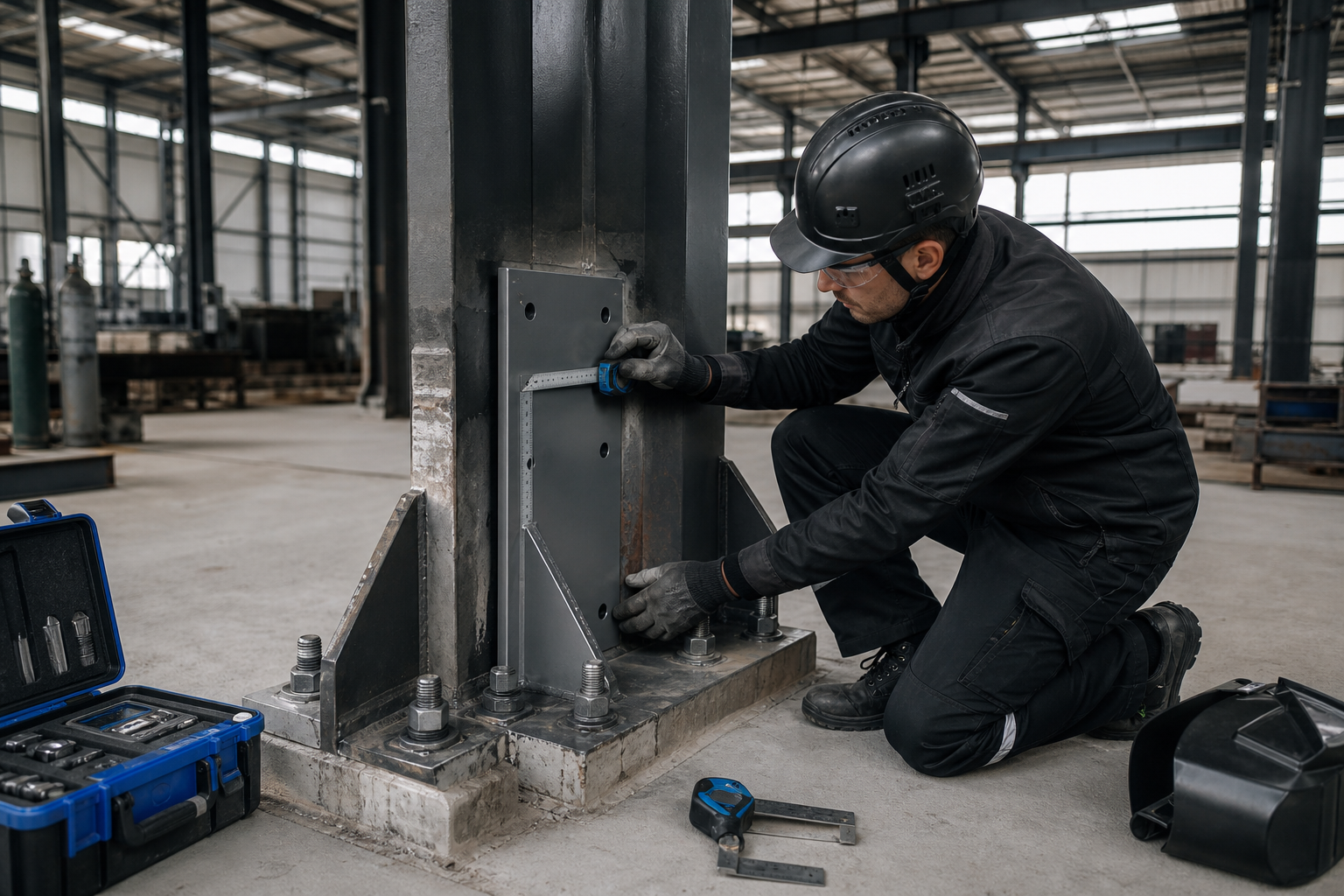
Intervention security
Not everything should simply be welded over again.
If the damage is the result of overload, fatigue, corrosion, or incorrect geometry, patching the crack alone will not solve the problem. First of all, the cause must be removed and a suitable repair detail suggested.
- revealing the extent of the damage
- assessment of subsequent parts
- surface and edge preparation before repair
- function check after intervention
Service route
Diagnosis first. Then intervention and inspection.
For more complex or load-bearing elements, a design or structural assessment may be required before repair.
Documentation
Photos, description of the fault, dimensions, function and available documentation.
Site survey
Actual condition, access, material, anchoring and extent of damage.
Repair or manufacture
Chosen procedure, new part, adjustment of assembly and surface protection.
Control
Setup, motion or function test and handover of intervention.
Related areas
When service becomes a new solution.
If the repair does not make technical or economic sense, we can follow up with new production, construction or electrical modification.
Do you need a repair or modification on site?
Send overall photos, details of the problem, dimensions and location of the intervention.