 Request a quote ›
Privacy, light and character
Metal infills.
The infill determines visibility through the structure, airflow, weight and maintenance. We design it together with the frame, drive, safety requirements and the surrounding architecture.
For large gates, together with the infill, we also deal with the wind, the weight of the leaf, the stiffness of the frame and the power of the drive.
Variants
Infill designed around its purpose.
The best result is achieved when we name our priorities before choosing: privacy, ventilation, safety, weight, cleaning, resistance to wind and visual connection with the building.
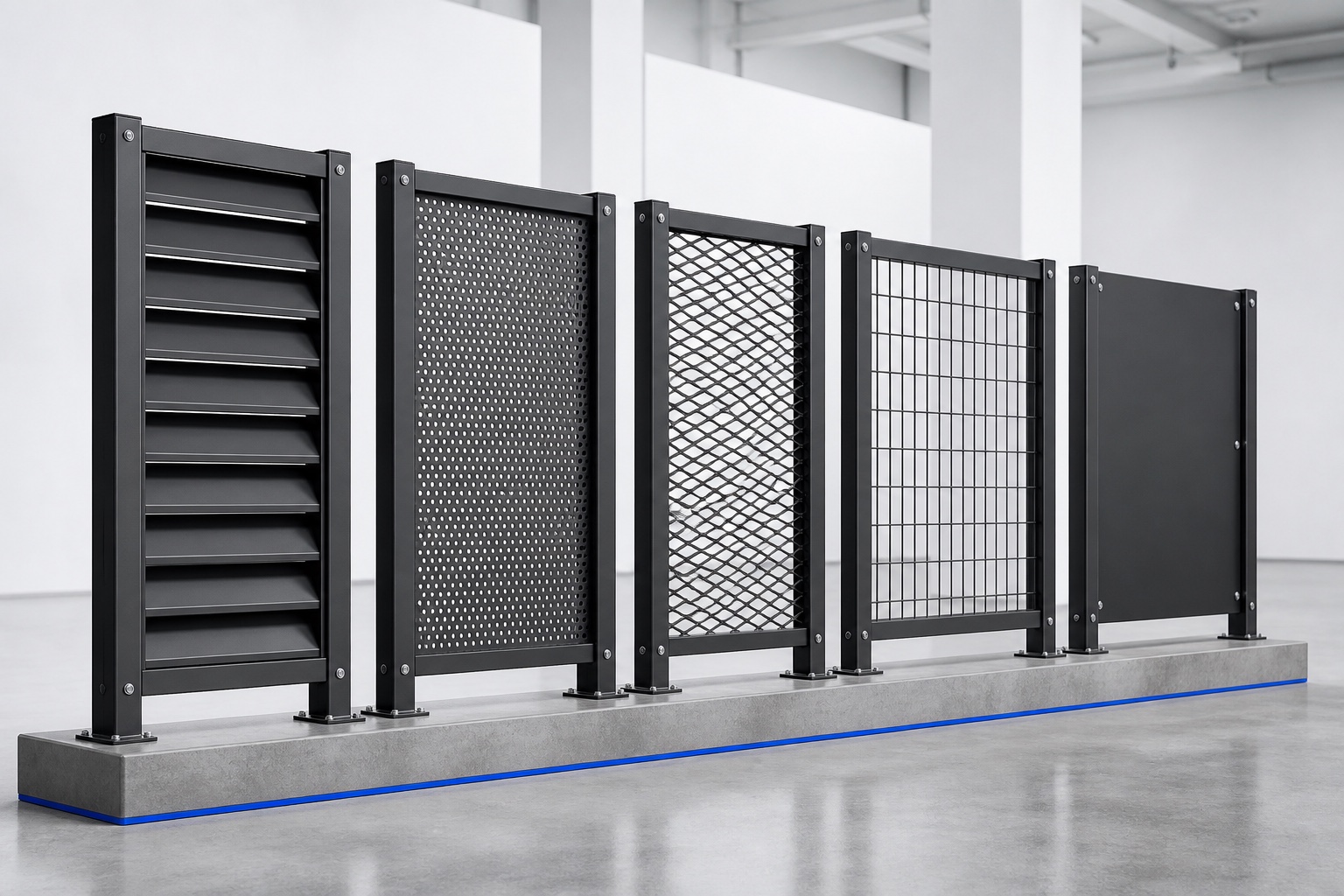
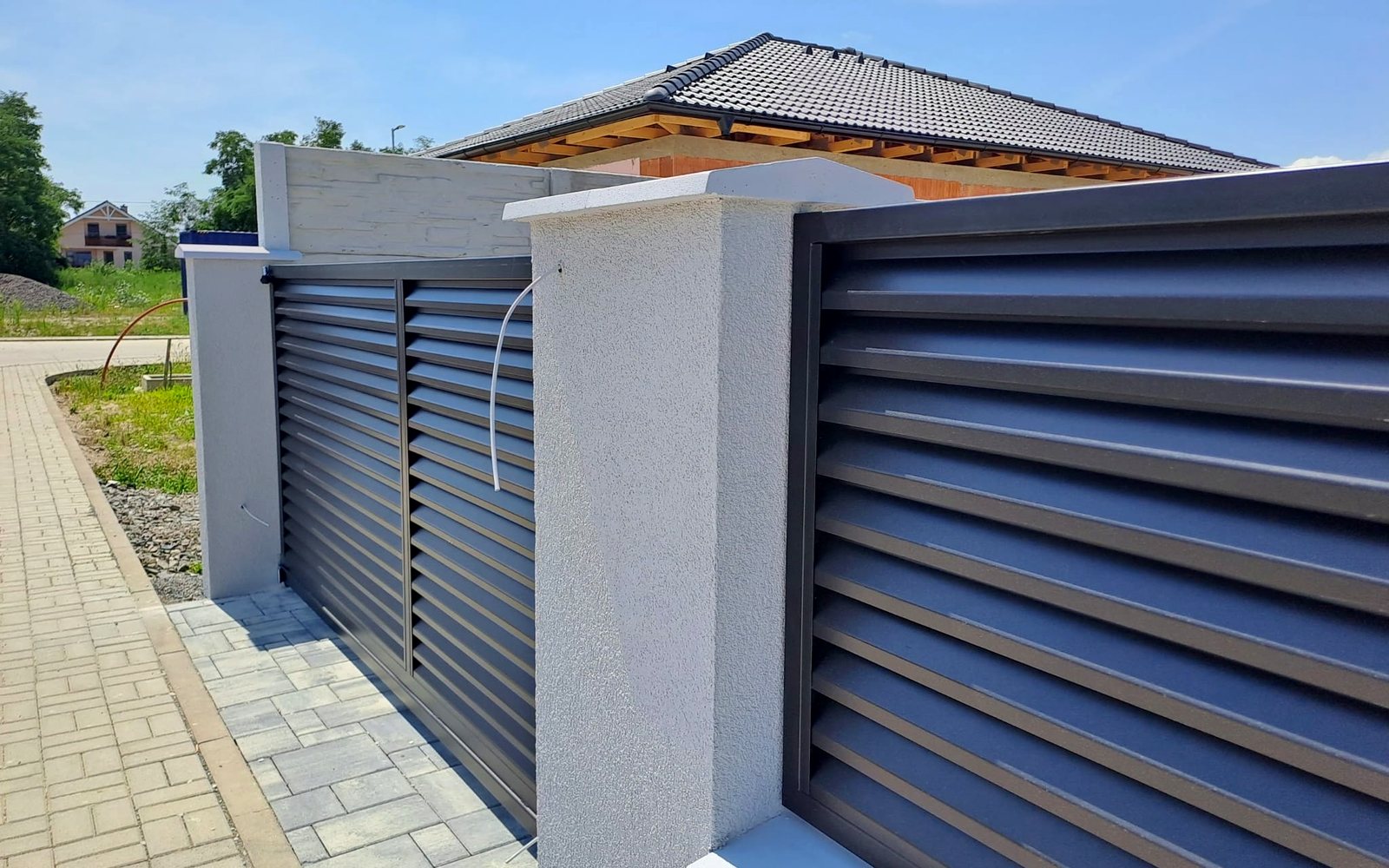
Folded slats
Clean lines, regulated views and more privacy. The angle, gap and direction of the slats change the result as well as the wind load.
Solid sheet
Maximum coverage and significant surface area. It needs a rigid frame, secure edging and careful assessment of the wind.
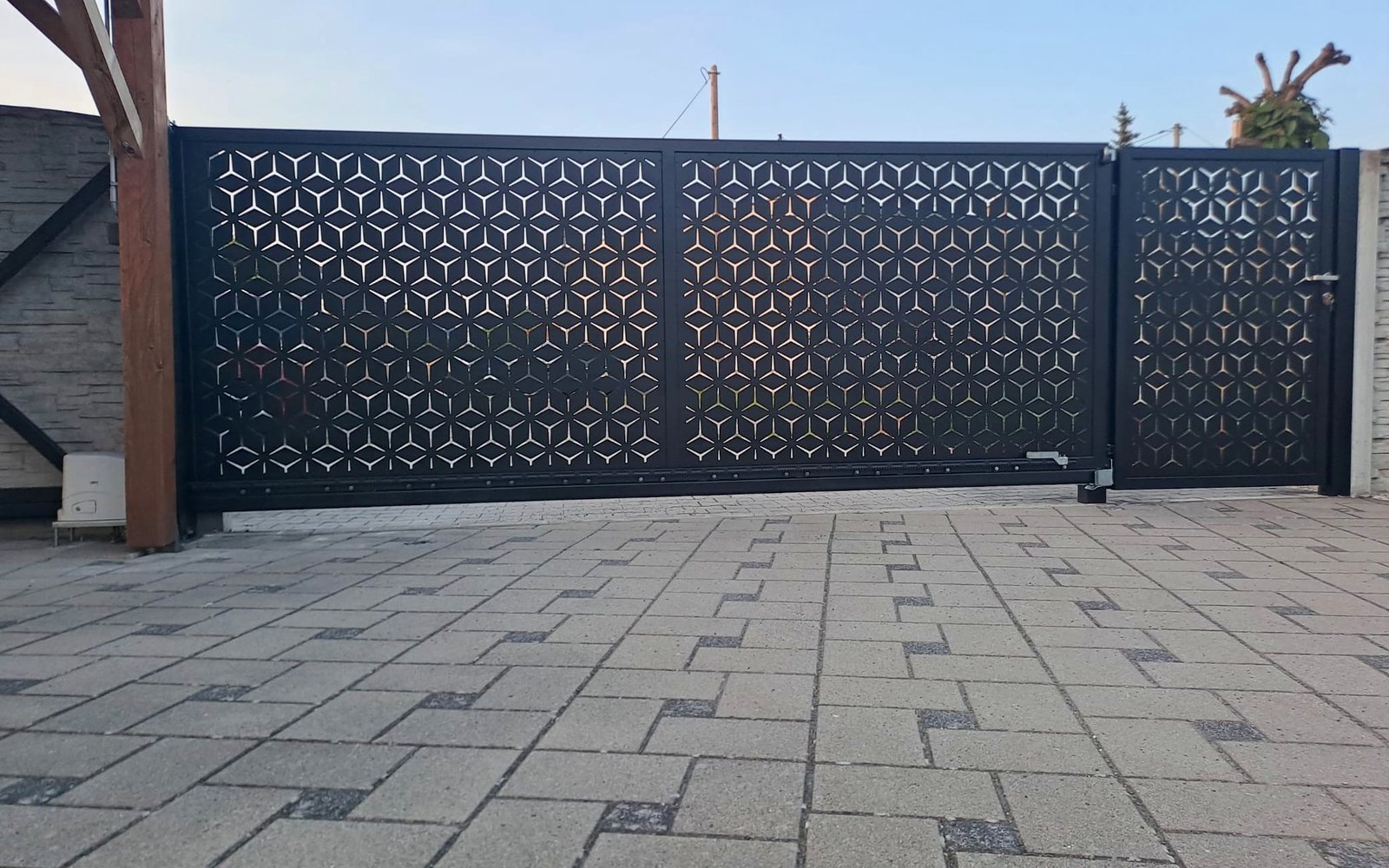
Perforated sheet
A precise grid of openings connects protection, air and light. The percentage of free surface affects both function and strength.
Expanded metal
Durable, spatially plastic and well-ventilated material for fences, screens, technical boxes and industrial facades.
Mesh and wire fencing
Low optical weight and high transparency. Suitable for protective fences, paddocks and technical barriers.
Combined infills
Slat with sheet metal, metal with wood or two levels of transparency according to the orientation and function of individual zones.
Quick comparison
Privacy is not the only consideration.
As a rule, a more closed infill catches more wind. A more open one is lighter and airier, but will provide less privacy. The final design is always a compromise according to the specific location.
| Filling | Privacy | Air flow | Weight | Maintenance | Suitable for |
|---|---|---|---|---|---|
| Slats | Medium to high | Controlled by spacing and angle | Medium | Surfaces are easy to access | Fences, gates, screens, pergolas |
| Solid sheet | Full | Minimal | Medium to higher | Large smooth surface | Gates, enclosures, covers |
| Perforated sheet | Depends on the pattern | Medium to high | Medium | Perforations must be accessible for cleaning | Screens, railings, ventilated covers |
| Expanded metal | Low to medium | High | Low to medium | More textured surface | Technical fences, facades, infills |
| Mesh | Low | Very high | Low | Easy inspection | Protective and industrial fencing |
The wind
With sliding and swing gates, high fences and screening walls, the openness of the infill is reflected in the forces in the frame, columns, anchors and drive. The assessment is based on size and location.
Real look
Grid, shadow and depth.
The spacing of the slats, the size of the mesh and the distance of the infill from the frame create a different drawing up close and another from a distance. That's why we also assess the solution from the perspective of the street or operation.
Filling design
From appearance to installation.
Every detail must remain secure, straight and serviceable even after years of use.
Priority
Privacy, light, air, security or presentable appearance.
Raster
Spacing, direction, opening percentage and binding to frame dimensions.
Frame
Stiffness, dilatation and method of attachment without waviness of the infill.
Surface
Zinc, lacquer or duplex including cuts, welds and hidden surfaces.
Service
Cleaning, part replacement, drive access and water drainage.
Related chapters
Frame, infill and colour as one coordinated system.
We design the infill along with the profiles, surface and color so that the connections do not have an additional effect.
We will select the right infill for your application.
Send dimensions, photo of place and amount of privacy. We will design the frame, raster, surface and assembly.